A Tale of Two Maps: Why Your Prompts Matter
Oct 2, 2026 · 4 min read
 MB SamuelFounder
TL;DR: Knowing how to ask AI for what you want - and deciding what you want upfront - makes a big difference in the quality of AI work. At Gradient, we call this Direction, and it's a key part of how we define AI fluency.
Some days I think AI is the most brilliant and powerful tool on earth.
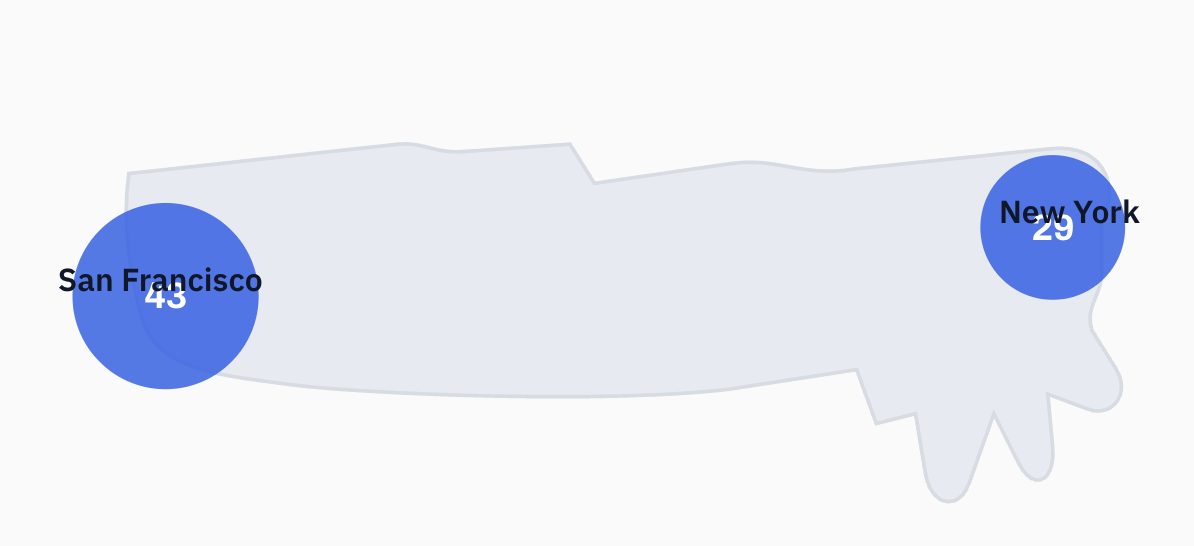
Other days, I ask AI to make a map, and it hands me this:
But a few months earlier, I asked AI to make a different map and got this back:
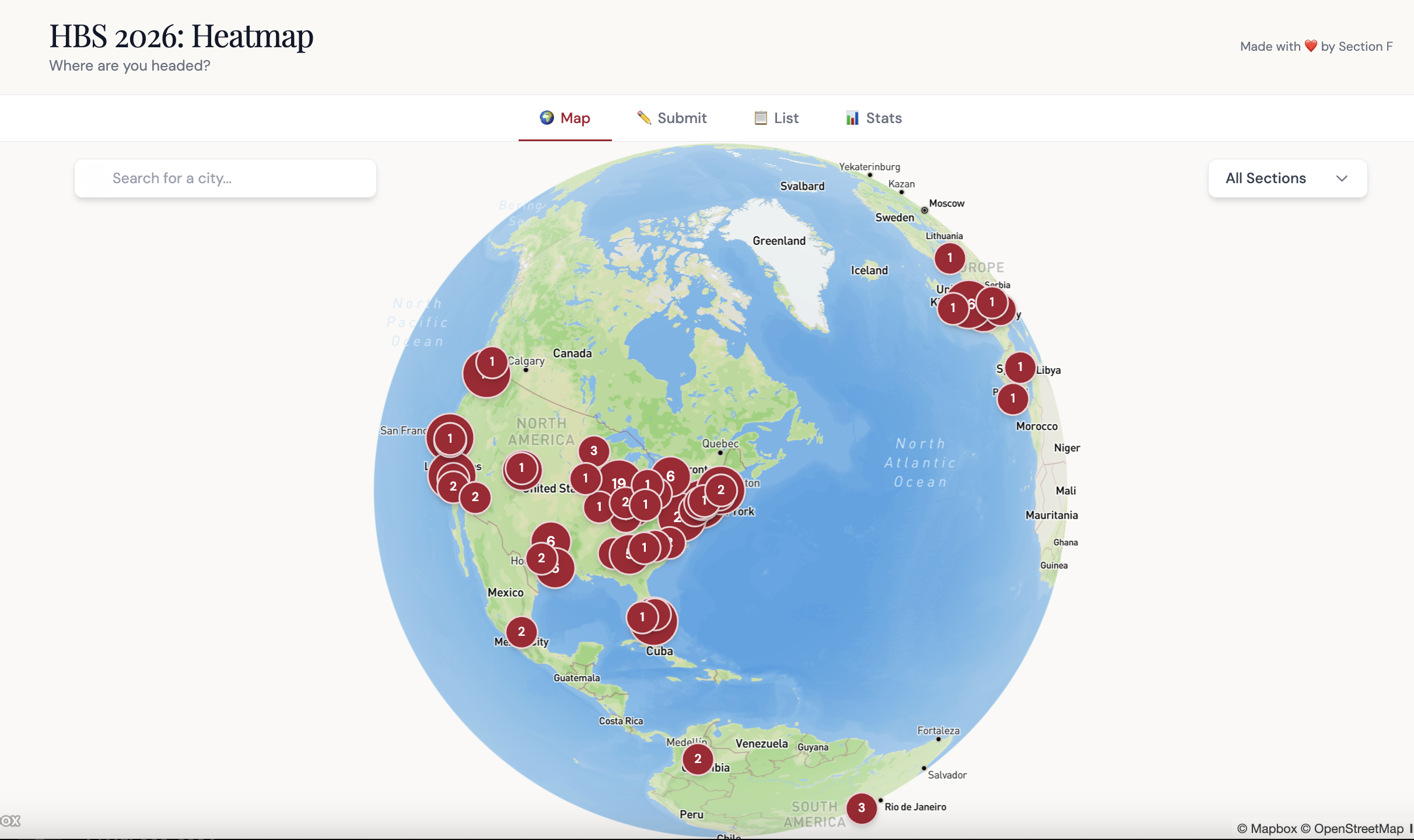
Here's what's weird: the squished 2D blob map was made with a newer frontier model than this spinning, dynamic globe. How is that possible?
Direction: Good prompting makes a world (ha!) of difference
For better or worse, the difference is mostly attributable to me and the direction I provide (or don't provide) to the AI.
For my HBS city heatmap project, I came in with a vision. I asked for a spinning globe where my classmates could search for a city and pin themselves to it. Claude went and found Mapbox, which has a free tier generous enough for a class project, and a few minutes later I had something people assumed I'd spent weeks on.
For the blob, my prompt was closer to "maybe do a map," buried in a list of eight other things I wanted done that afternoon. Without clear guidance, the AI drew a rough map and called it a day.
The better model gave me the worse map.
We call this Direction: how clearly you define the goal and the boundaries so the AI can hit them. It's one of four dimensions we measure, alongside Setup, Judgment, and Mindset, as part of Gradient's AI fluency framework.
Direction isn't a matter of writing longer prompts. It's about being clear on your goals, intent, and vision, or working with the AI to explore ideas and develop that vision. (P.S. if you want the mechanics, our field guide has a short entry on writing prompts that work.)
Asking AI to interview you is also Direction
Let's go back to the blob.
I told Claude I was disappointed. My prompting was bad again: I said the map "looks terrible," which Claude then quoted politely back to me.
But this time I didn't ask for a fix. I asked it to ask me questions until we agreed on what better meant.

You don't have to know how to describe what you want. You only have to recognize it when you see it. Having it ask you questions turns a blank page into a multiple choice test.
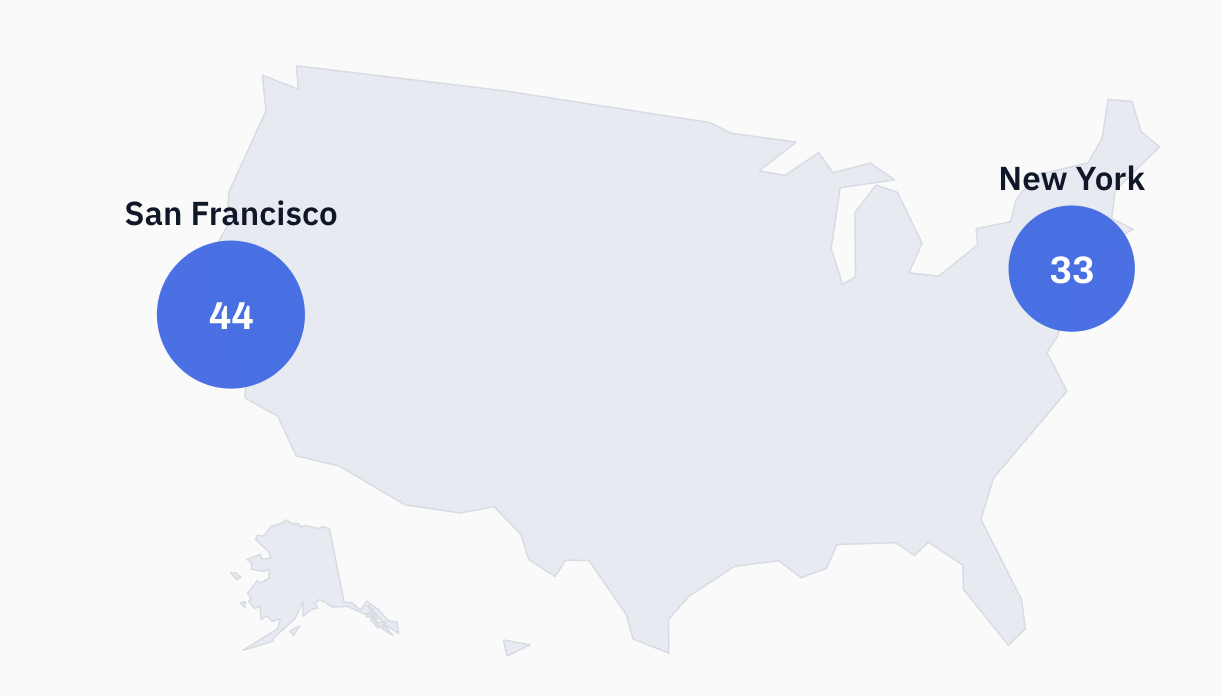
A few rounds later I had the map I wanted.
Setup: the globe needed more than a good prompt
There's a second difference between the two maps.
The globe works because it calls an API. Mapbox renders the sphere, handles the projection, and turns "Lisbon" into coordinates.
We call that Setup: how you configure the environment, tools, and context so the AI can do the job. Knowing (or using AI to find out) that Mapbox exists, that its free tier covers a class project, and that an API key belongs in an environment variable rather than in the prompt, is what separates the two images.
That's why coding basics sit in the most advanced track of our AI trainings. Writing code with AI is what let me build the globe without being able to build the globe.
Three things to try on your next prompt
- Decide before you type. Make sure you have a clear vision, or ask the AI to help you define one.
- Ask for options. Ask for three approaches and the tradeoffs, and look for pre-built solutions - like the Mapbox API - for complex tasks.
- Make it interview you. End with: "Ask me questions until you have what you need."
If you want to see how your team directs AI today, book a walkthrough.
Start hiring AI fluent talent.
We’ll show you an assessment, walk through the scoring engine, and get you live in a few hours.
More from the blog
Build a Brand Skill That Actually Works
One of the first things we help teams do in our trainings is set up a /brand skill, because it makes AI dramatically more useful overnight. Here is how ours is designed, part by part, with the pitfalls to avoid and a downloadable example.
MB SamuelSep 15, 2026 · 15 min read
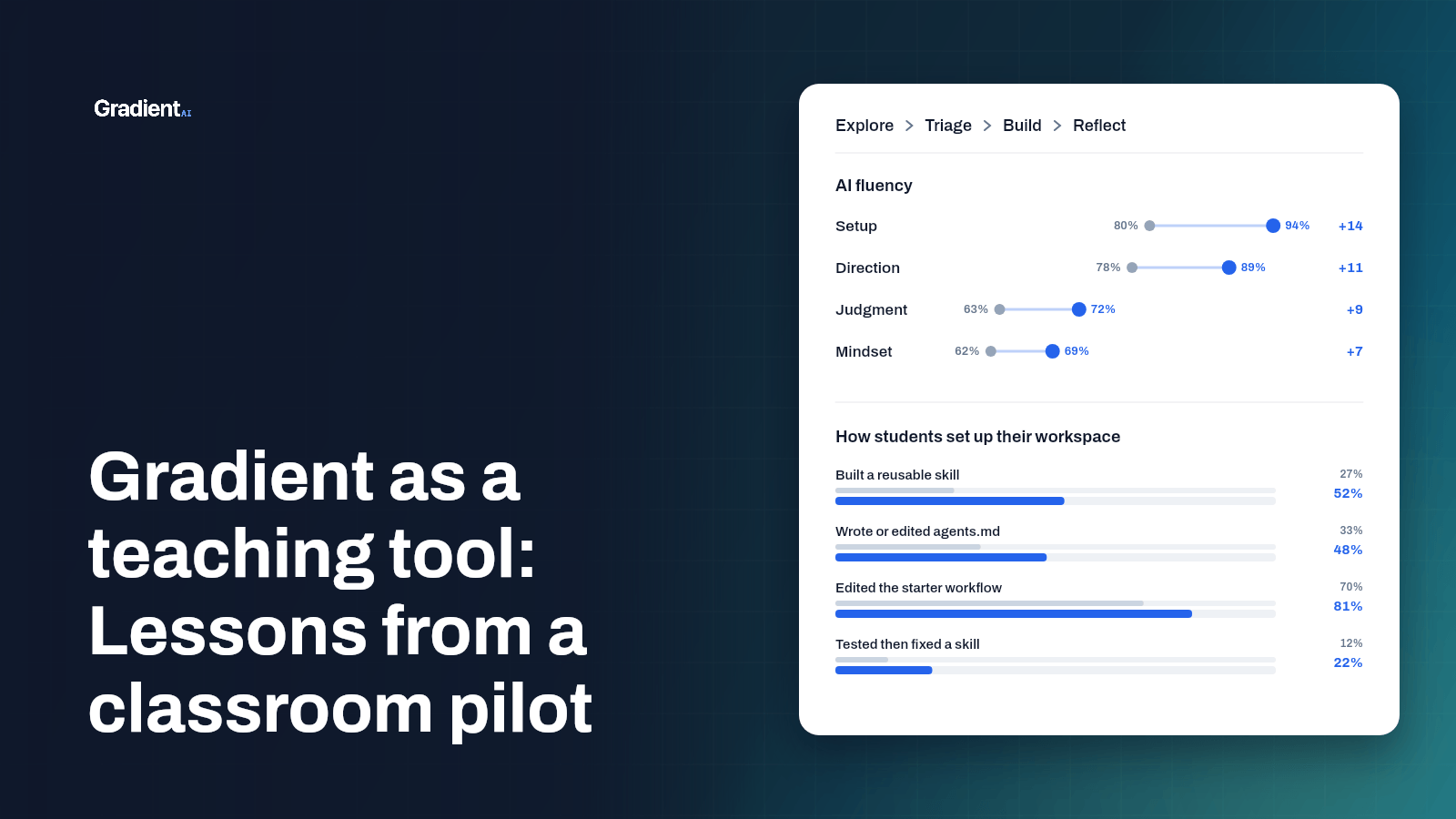
Gradient as a teaching tool: Lessons from a classroom pilot
This summer we ran Gradient as a pre- and post-test in a three-week graduate course on generative AI. Here is what the numbers, the students, and the instructors taught us about measuring AI fluency.
MB SamuelSep 10, 2026 · 6 min read
The Most Human Part of How We Work With AI
AI is capable of far more than we use it for, and polished outputs all look alike now. What sets people apart is the inputs, the prompts, the context, and the corrections. Here is how we see that process, in hiring and beyond.
MB Samuel Ashwanth Samuel
Aug 9, 2026 · 5 min read